

Feed Grade Capsanthin
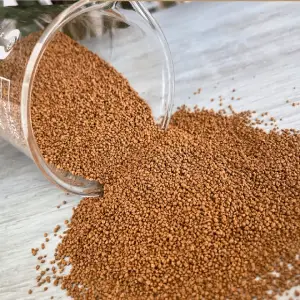
Feed Grade Capsanthin is a natural carotenoid colorant extracted from red peppers. It is produced through a refining process and is highly safe, stable in color, and easily absorbed by animals. It is mainly used for coloring poultry egg yolks, skin, and aquatic animals, improving the appearance quality of livestock and aquatic products, and is a commonly used natural color enhancer in the feed industry.
Chempora is a leading supplier of Feed Grade Capsanthin, we provide customers with high quality Feed Grade Capsanthin , if you have any requirements, please feel free to contact info@chempora.com, we will reply you as soon as possible.
CAS No.:465-42-9
MOQ: 20 kg
Specification Available: Feed Grade
Product Parameter of Feed Grade Capsanthin
| Items | Result |
|---|---|
| Appearance | reddish oily liquid |
| Solubility | Insoluble in water, soluble in oils |
| Chemical Formula | C40H56O3 |
| Molecular Weight | 584.87 g/mol |
| Melting Point | 177 °C |
| Boiling Point | 581.82 °C |
| XLogP3 | 9.80630 |
| Density | 1.012g/cm3 |
| Long Term Storage | store at <-15°C, keep under inert gas: Nitrogen |
The main component of Feed Grade Capsanthin
Feed-grade Paprika Oleoresin/Red is a natural pigment extracted from mature red chili fruits, mainly used to improve the color of poultry products (such as egg yolks, chicken skin, and the surface of fish and shrimp), making them present an attractive golden yellow or orange-red color.
Its main components can be divided into two parts: the core coloring component (the main active ingredient) and the non-coloring accompanying component:
1. Core coloring component (carotenoid class)
This is the key substance that enables the pigment to function as a colorant. It belongs to terpene compounds. Depending on polarity and color, it is mainly divided into two types:
Red components (with higher polarity):
Capsanthin (Capsian Red): This is the most abundant and strongest coloring pigment in chili red, accounting for about 30% to 40% of the total pigment content. It is the main factor determining the red color of the product.
Capsorubin (Capsian Red): Another important coloring pigment, with a content second only to capsanthin.
Note: These two red components usually account for 50% to 60% of the total pigment content.
Yellow components (with lower polarity):
β-Carotene (β-Carotene): Has vitamin A precursor activity and appears orange-yellow.
Zeaxanthin (Zeaxanthin): Appears yellow and contributes significantly to the coloring of poultry egg yolks and skin.
Cryptoxanthin (Cryptoxanthin): Also a yellow pigment with vitamin A activity.
Note: These yellow components are very important in feed applications because they can directly convert into pigment deposits in the animal body.
2. Non-coloring accompanying components
During the extraction process, in addition to the pigment, other components may be introduced or retained, which are usually also retained in feed-grade products and have certain nutritional value:
Fatty acids and their esters: Natural capsanthin and capsorubin in chili red usually exist in the form of fatty acid esters (such as lauric acid esters, myristic acid esters, palmitic acid esters, etc.) in plants. Feed-grade chili red is often in an oil resin form, containing a large amount of chili seed oil or residual fatty acids from extraction solvents, which helps with the absorption of lipid-soluble pigments in the animal’s intestines.
Chili seed oil: If extracted using an oil-based method, the product will contain natural oils from chili seeds or fruit peels, providing energy.
Micronutrients: Contains small amounts of vitamin C, vitamin E (natural antioxidants, which help protect the pigment from oxidation), and other fat-soluble vitamins.
Capsaicin (Capsaicin): Note the distinction. Although chili contains capsaicin (the substance that produces the spicy taste), in the production of high-quality feed-grade chili red, the content of capsaicin is usually controlled as much as possible through process control, or low-spicy varieties are selected for extraction.
Because excessive capsaicin may affect the animal’s feed intake (reduced palatability) or cause digestive tract irritation. However, a small amount of capsaicin is sometimes considered to promote animal digestive fluid secretion.


Feed Grade Capsanthin VS Food Grade Capsanthin
Feed-grade capsanthin and food-grade capsanthin, although both derived from natural red peppers, have the same core color-inducing components (such as capsanthin, capsorubin, etc., carotenoids), yet there are significant differences in the implementation standards, safety indicators, purity requirements, carrier addition, and application scenarios.
| Indicator Items | Food Grade | Feed Grade | Reasons for Differences |
|---|---|---|---|
| Heavy Metal Limits | Extremely strict. Limits for lead (Pb), arsenic (As), mercury (Hg), and cadmium (Cd) are very low (e.g., lead is usually ≤ 2.0 mg/kg or even lower). | Relatively lenient. Allows slightly higher content than food grade, as long as it does not affect animal health and the safety of final livestock products. | Directly ingested by humans, requiring maximum reduction of chronic poisoning risks. |
| Microbial Indicators | Strictly restricted. Total bacterial count, coliforms, mold and yeast, and pathogenic bacteria (Salmonella, Staphylococcus aureus) have strict limits, usually requiring sterility or very low bacterial count. | Relatively lenient. Mainly controls specific pathogenic bacteria such as Salmonella, with higher tolerance for total bacterial count, as feed usually undergoes high-temperature pelleting. | Directly consumed by humans, requiring prevention of foodborne diseases; feed processing has a sterilization process. |
| Solvent Residues | Extremely strict. Residues of organic solvents used for extraction (such as n-hexane, acetone, ethanol) must be controlled at the ppm level or even undetectable. | Relatively lenient. Allows a certain amount of solvent residues, as long as they are within the animal safety range and do not remain in meat, eggs, or milk. | Prevents solvents from causing poisoning to humans. |
| Pesticide Residues | Comprehensive testing. Has strict limits for multiple pesticide residues. | Key testing. Mainly targets highly toxic pesticides, with relatively fewer standards than food grade. | Requirement for full-chain control of food safety. |
| Capsaicin Content | Almost zero. Capsaicin (source of spiciness) must be completely removed through processes to avoid affecting food taste. | Trace amounts allowed. Small amounts of capsaicin are even considered to promote animal appetite and digestion, but excessive amounts affect palatability, so there is also an upper limit, but it is not as strict as food grade. | Food needs to ensure taste; feed needs to balance growth-promoting effects. |
The Application of Feed Grade Capsanthin
Feed-grade Capsanthin is a natural carotenoid pigment extracted from red peppers. Through special processes such as saponification and microencapsulation, it is processed to be more suitable for animal absorption and has higher stability. It has extensive and important application scenarios in the livestock and aquaculture industries, mainly including the following aspects:
1. Poultry farming (the most mature application field)
This is the field where feed-grade Capsanthin is most widely used. It is mainly used to improve the appearance color of poultry products and enhance their commercial value.
Egg yolk coloring: Chickens and ducks cannot synthesize carotenoids on their own and must obtain them through feed. Adding Capsanthin can significantly deepen the color of egg yolks, making them present the desired deep orange or orange-red color, increasing the red value of egg yolks (Roche Yolk Color Fan).
Skin and leg coloring: Used for meat chickens and meat ducks, it can improve the color of their skin, legs, and beaks. It is usually combined with Lutein to make the skin of meat chickens present an attractive golden or orange-yellow color, enhancing the appearance.
Improving feather color: It is helpful for ornamental birds or breeding poultry to maintain the vividness of their feathers.
2. Aquaculture
In aquaculture feed, Capsanthin is mainly used for color enhancement and improving the flavor of meat.
Fish body color enhancement:
Rainbow trout, salmon: Adding Capsanthin can effectively improve the muscle color of fish, making it present the natural orange-red color, simulating the color of wild fish.
Aquatic ornamental fish (such as goldfish, koi): It can significantly enhance the red pigment deposition on the body surface of fish, making the color more vivid and red, improving the ornamental value.
Crustaceans (shrimp, crab): Helps shrimp and crab shells present a more vivid red color after cooking or enhance the color in live state.
Enhancing antioxidant capacity: Capsanthin has antioxidant properties, which help enhance the immunity of aquatic animals and reduce stress responses.
3. Livestock farming (pigs, cattle, sheep, etc.)
Although its application in ruminant animals is relatively less, it is still used in certain circumstances.
Pork color improvement: Appropriate addition can improve the stability of myoglobin in pork, making the meat color more red and extending the shelf life.
Cattle and sheep fat coloring: In certain regions, consumers prefer yellow fat (such as certain breeds of sheep or cattle), and adding carotenoids (including Capsanthin) to the feed can regulate the color of fat.
Pet food: Used in cat food and dog food, it not only has a coloring effect (making the particles more attractive), but also has antioxidant properties that help improve the health of pets.
4. Other functional applications
In addition to being a coloring agent, feed-grade Capsanthin also has the following functional characteristics, expanding its application scenarios:
Alternative to antibiotics for growth promotion: Studies have shown that Capsanthin has certain antibacterial and anti-inflammatory effects. In the context of “reducing antibiotics/freedom from antibiotics” in farming, it has been explored as a natural feed additive to promote animal growth, improve intestinal health, and partially replace antibiotics.
Improving reproductive performance: Some studies have indicated that carotenoids can improve the reproductive performance of breeding poultry and livestock, such as increasing fertilization rate, hatching rate, and survival rate of young animals.
Antioxidant and immune regulation: As a powerful antioxidant, it can eliminate free radicals in the animal body, alleviate the negative effects of heat stress or other environmental stress on animals, and enhance the body’s immunity.
How to Use Feed Grade Capsanthin?
Feed-grade capsanthin is mainly used in animal feed for poultry, meat poultry, and aquatic animals. When using it, it is necessary to follow the principles of accurate measurement, uniform mixing, and proper storage.
The applicable objects include egg-laying chickens, egg ducks, broilers, broiler ducks, and aquatic products (fish and shrimp).
The recommended addition amount is calculated based on the total mass of the formulated feed:
Egg-laying poultry feed: 0.1‰ – 0.2‰ (adjusted according to the target color of egg yolks)
Meat poultry / Aquatic feed: 0.15‰ – 0.3‰ Usage method
It can be directly measured and added to the feed mixer for synchronous mixing with the raw materials.
If a more uniform dispersion is required, the premix can be diluted with vegetable oil or a carrier first, and then added to the batch of feed.
It is suitable for conventional feed processing techniques such as granulation and extrusion, with good heat resistance and stability.
The mixing process requires ensuring that the mixer is stirred for 3 to 5 minutes or more to ensure the even distribution of the colorant and avoid excessive concentration in certain areas.
Storage and operation
Store it in a sealed manner in a cool, dry, dark, and well-ventilated environment, away from high temperatures and strong light.
Use up the product as soon as it is opened, and promptly seal the remaining product to prevent oxidation and deterioration.
Notes for Attention
This product is a feed additive and should not be directly fed to animals. It needs to be evenly mixed with complete feed at the prescribed ratio for use.
Add strictly according to the recommended dosage. Avoid over-dosage to prevent the product from appearing too dark, which may affect its appearance.
Store in a cool, dry, dark and ventilated place, away from high temperatures and open flames. Prevent the effective components from decomposing and losing their efficacy.
Use up the product as soon as possible after opening. Store it sealed to prevent moisture absorption, oxidation and contamination.
Avoid contact with eyes and skin during operation. Wash hands promptly after use.
When used in combination with other feed additives, it is recommended to conduct a small-scale trial to confirm the stability first, and then carry out batch production.
Contact Us
CHEMPORA CO., LIMITED
Contact Person: Mr. Stephen Dean
WhatsApp & Wechat: +8615026665594
E-mail: info@chempora.com
More Product Recommendations
In addition to providing you with Feed Grade DL-Methionine , we can also provide you with other animal feed additives, food additives, nutritional enhancers and fine chemicals.